
Canonization Ceremony of the Blessed Archbishop Ignatius Maloyan
-
by
APECL
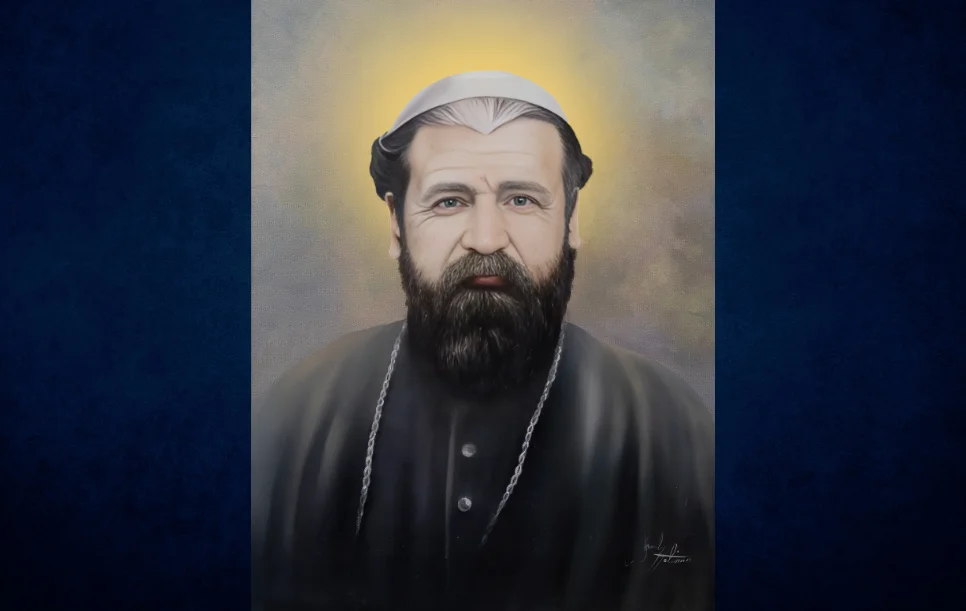
Blessed Ignatius Maloyan, Archbishop of Mardin of the Armenian Catholics, is about to be proclaimed a Saint—an event marking a significant moment for the Armenian community and for the Catholic Church as a whole. The canonization Mass will take place in the Vatican on 19 October 2025.
Ignatius Maloyan was a bishop who perished in the Metz Yeghern – the Great Evil – in which grave persecutions were perpetrated against Armenian Christians at the beginning of the 20th century. He endured evil, accepted martyrdom, and triumphed over malevolence. Pope John Paul II beatified Maloyan as a martyr in 2001, while Pope Francis approved his canonization earlier this year, which will now be celebrated in a solemn Mass presided over by Pope Leo XIV on 19 October 2025 at the Vatican. Maloyan’s name will thus be inscribed into the official list of saints, the “canon,” both to recognise his heroic and virtuous life, as well as to inspire believers that evil can and must be defeated.
Maloyan was born on 15 April 1869 as Shukrallah Melkon and enrolled at the Armenian Catholic Monastery at Bzommar, Lebanon, in 1883. He was 14. The young postulant perceived the monastery as the “hope of the nation,” its garden, the “hope of Armenia,” and those who “touched” it, lucky enough to witness pure joy. Bzommar, which became the seat of the Armenian Catholic See in 1749, tutored the young man in theology and philosophy. It further instilled in him a love for virtue. He learned how to pray, understand scriptures, communicate with fellow believers [in addition to his native Armenian, Maloyan spoke five languages—Arabic, English, French, Italian and, of course, Turkish], as well as preach the gospel. He took the name Ignatius as an Armenian Catholic priest in 1896, served in both Cairo and Alexandria, Egypt, as well as Constantinople (which became Istanbul in 1930), before he returned to his native city. The cleric was consecrated Bishop of Mardin in October 1911.
Mardin was a relatively cosmopolitan town in Anatolia, the seat of the Syrian Catholic Church and housed a Jacobite [Syrian Orthodox] Patriarchate, along with the Chaldean and Armenian Catholic bishoprics. An Ottoman administrative Mutassarifiyyah [district], it also housed three prominent mosques, given that nearly half of the population was Muslim. All of these communities co-existed in fundamental harmony that, in hindsight, boggles the mind. What happened to its inhabitants’ open-mindedness at the height of the massacres that followed was inexplicable. Still, like the vast majority of Ottoman subjects, Armenians, Syriacs, and Greeks were loyal to the Ottoman Porte. And Maloyan was no exception. Ironically, he even received a firman [Order] that decorated him on 20 April 1915, just four days before the raid that aimed to decapitate the Armenian nation by arresting and executing prominent intellectuals. Little did Maloyan know that he, along with his mother, brother and at least one cousin, would fall to Ottoman wrath, thereby transforming the family into a household of martyrs.